
Pakistan
LUMS Concludes Historic Sanskrit Course, Reviving a Shared South Asian Heritage: — In a landmark moment for Pakistan’s academic and cultural landscape, the Gurmani Centre for Languages and Literature at Lahore University of Management Sciences (LUMS) has successfully concluded its Introduction to Sanskrit course. This achievement, celebrated in the final month of 2025, marks the first time since Partition in 1947 that Sanskrit has been formally taught inside a Pakistani university classroom.

A Historic Revival of a Classical Language
Sanskrit, one of the world’s oldest and most influential classical languages, quietly returned to Pakistani classrooms after decades of absence. What began as a modest three-month weekend workshop evolved into a full four-credit university course as interest surged among students and scholars.
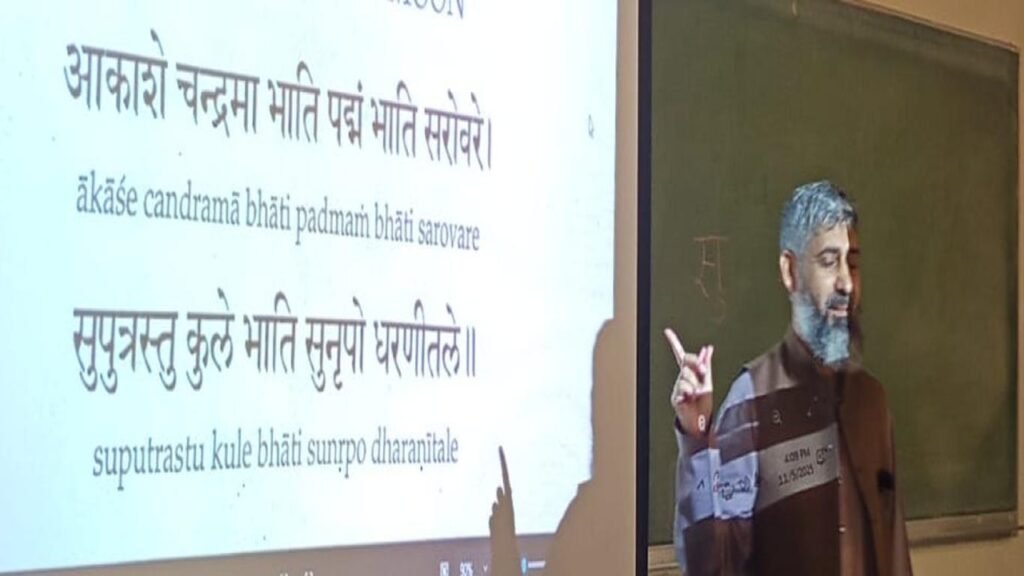
Dr. Shahid Rasheed, whose passion ignited this academic revival, called the course “a small yet significant step toward reviving serious study of a language that has shaped philosophical, literary, and spiritual traditions across South Asia.” In an interview with The Tribune, he explained how years of independent study—guided by experts like Cambridge scholar Antonia Ruppel and Australian Indologist McComas Taylor—prepared him to lead the program.
Rediscovering Pakistan’s Forgotten Sanskrit Archive
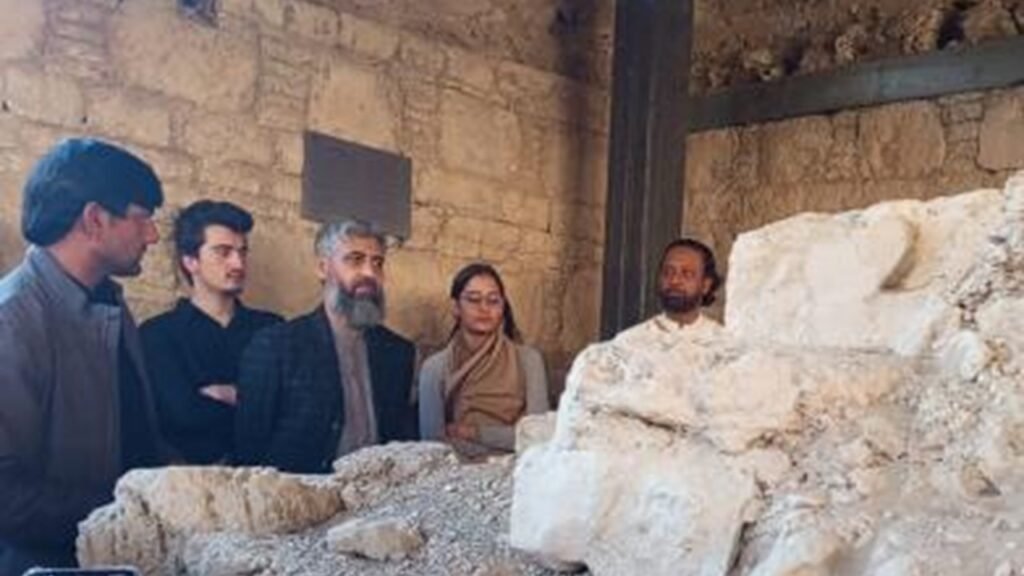
The initiative also aims to reconnect local scholars with Pakistan’s vast but long-neglected Sanskrit archive. Dr. Ali Usman Qasmi, Director of the Gurmani Centre, told The Tribune that Punjab University houses “one of the richest but least-studied collections of Sanskrit palm-leaf manuscripts,” catalogued in the 1930s by JCR Woolner. Since 1947, however, no Pakistani academic has worked on these manuscripts.
“Only foreign researchers use it. Training scholars locally will change that,” he said, emphasizing that the Sanskrit course supports LUMS’ broader linguistic ecosystem, which includes Sindhi, Pashto, Punjabi, Baluchi, Arabic and Persian.
Bridging Civilizations Through Language
Even with political sensitivities, interest continues to grow. As Dr. Rasheed shared with The Tribune, people often ask him why he is learning Sanskrit. “I tell them, why should we not learn it? It is the binding language of the entire region.” He emphasized that Panini, the legendary Sanskrit grammarian, hailed from this region and that many Vedic texts may have originated here.
“Sanskrit is like a mountain—a cultural monument,” he said. “We need to own it. It is ours too; it’s not tied to any one particular religion.”
A Hopeful Path Forward
As the Gurmani Centre plans future courses, scholars believe this initiative could help build bridges across South Asia. Dr. Rasheed concluded in his remarks to The Tribune: “Imagine if more Hindus and Sikhs in India started learning Arabic, and more Muslims in Pakistan took up Sanskrit. It could be a fresh, hopeful start—where languages become bridges instead of barriers.”
The conclusion of the Sanskrit course at LUMS showcases how academic curiosity and historical awareness can revive forgotten legacies and inspire cross-cultural understanding.