
Dr. Shabana Parvez, MD, FACEP, US Bureau Chief of The Desi Buzz and founder of Arlington Integrative Medical Associates (AIMA) and Babies4.us, sat down for an exclusive and insightful conversation with Salma Bi — a grassroots cricket champion who has dedicated over 15 years to transforming access to sport—especially cricket—for young women. Born in Pakistan and relocating to the UK at the age of four, she has empowered and inspired more than a thousand girls to actively participate in grassroots sports.
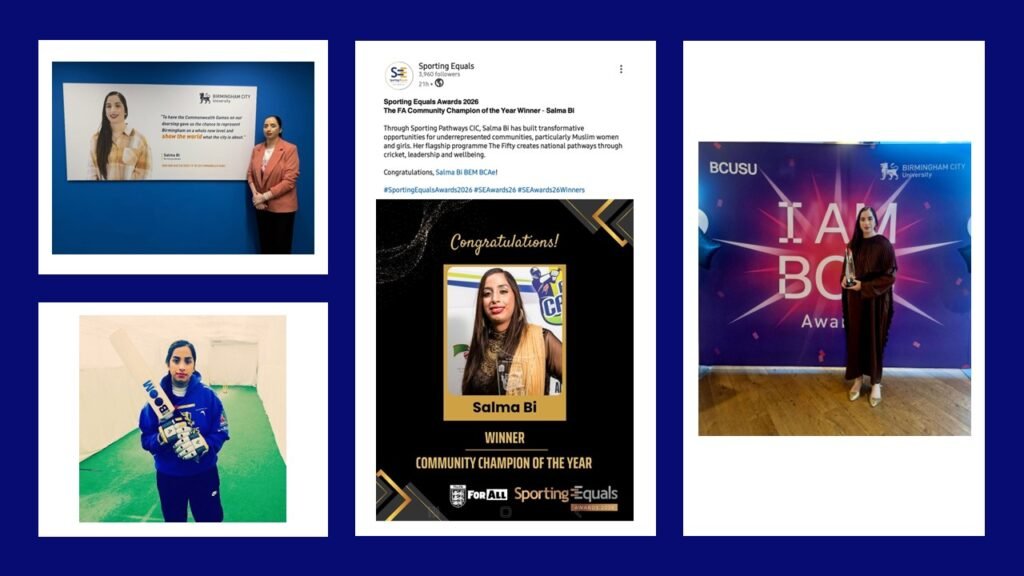
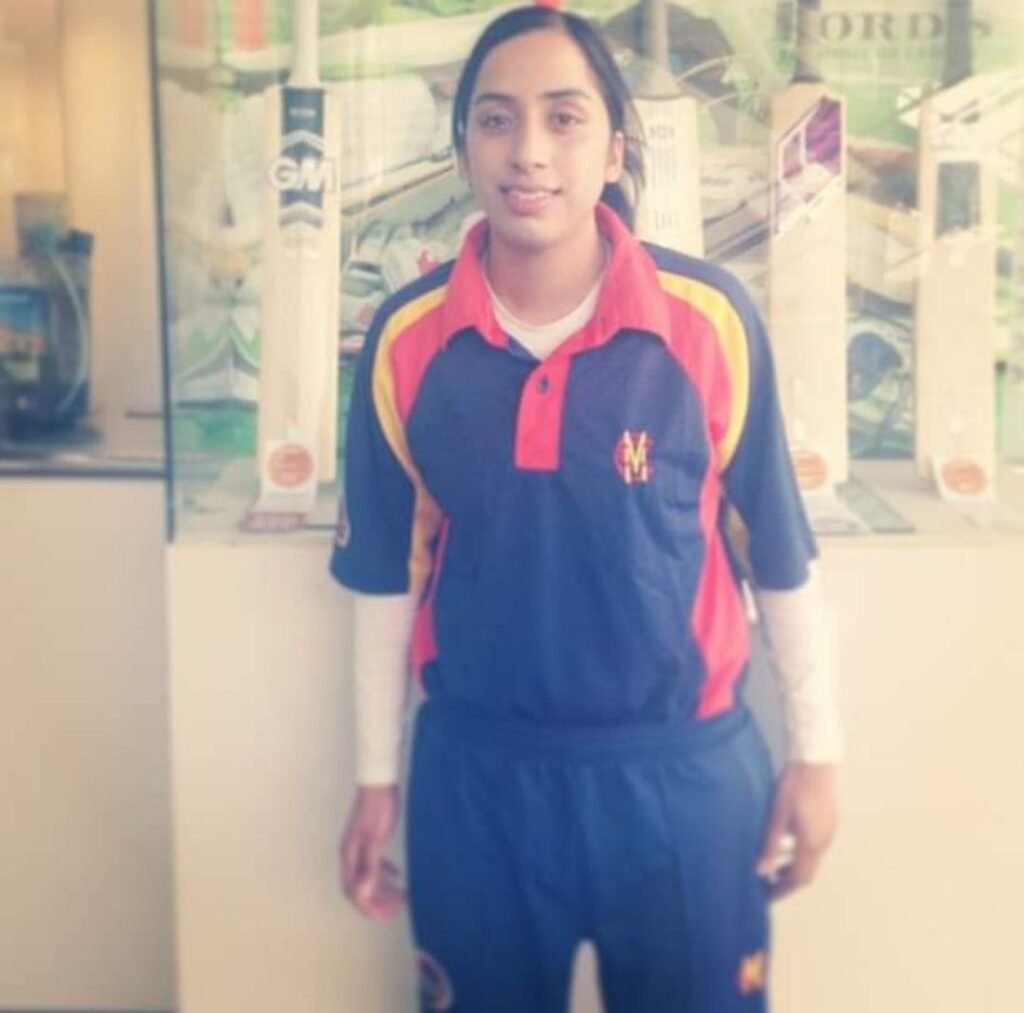
Her pioneering journey includes captaining the first all-Asian women’s football team in Birmingham and founding the first all-Asian women’s cricket team, breaking barriers and creating pathways for inclusion in sport. She is also among the very few female Asian cricket umpires in the UK, serving as a senior coach and director of a sports development organisation, while also representing Worcestershire, Northamptonshire, and the Marylebone Cricket Club (MCC) at county level.
Alongside her sporting achievements, she works full-time as a haemodialysis nurse in Birmingham, providing critical care to patients with kidney failure. In recognition of her exceptional contributions to sport, diversity, and community development, she was honoured with the British Empire Medal in the New Year Honours.

Check out other interviews: https://thedesibuzz.com/category/interviews-editorial/
Watch the interview on YouTube
Background & Journey
Dr. Shabana Parvez: Can you tell us about your early life and what shaped your journey into sports, healthcare, and community leadership?
Salma Bi: I grew up in a household where most of the boys were always playing sports in the garden. I watched a lot of cricket on television, and at that time I didn’t even know women’s cricket existed.
I naturally picked up the game and felt it gave me confidence and purpose. Later, at my all-girls school, I was selected for a match against Denstone College, and county coaches spotted me.
That was the first time I realised there was something called county cricket or club cricket.

When I went home and told my family, it became a turning point. My father especially was protective. He came from a strong sporting background himself—he was a kabaddi player and a weightlifter, and he had achieved a lot in his own sporting life.
He understood discipline and competition, but as a father in a new country, his instinct was to protect me. He had never seen a girl from our background travel long distances for sport or pursue cricket professionally.
He would ask me, “Where will this go? How will this help your future?” It came from care, not resistance.
But over time, I had to prove to him that sport was not taking me away from education—it was building my future alongside it. I continued my studies, went to college, and even applied for university independently to show my commitment.
Slowly, he began to understand. Seeing me balance education, sport, and responsibility changed his perspective. Eventually, he became one of my strongest supporters.
That support from my father, even though it came later, became a foundation for everything I achieved.periences collectively shaped my path into sports, nursing, and community leadership.
Dr. Shabana Parvez: From being a haemodialysis sister to a national award-winning community leader—how did this incredible transition happen?
Salma Bi: My nursing career has always been my passion. I lost my mother when I was nine years old, and that experience shaped my decision to enter healthcare.
I often felt that if I had medical knowledge earlier, I might have been able to help her. That stayed with me throughout my life.
I specialised in haemodialysis nursing, caring for patients with kidney failure, which gave me both purpose and stability.
At the same time, cricket required financial support—travel, equipment, match fees—so my nursing career funded my sporting journey.
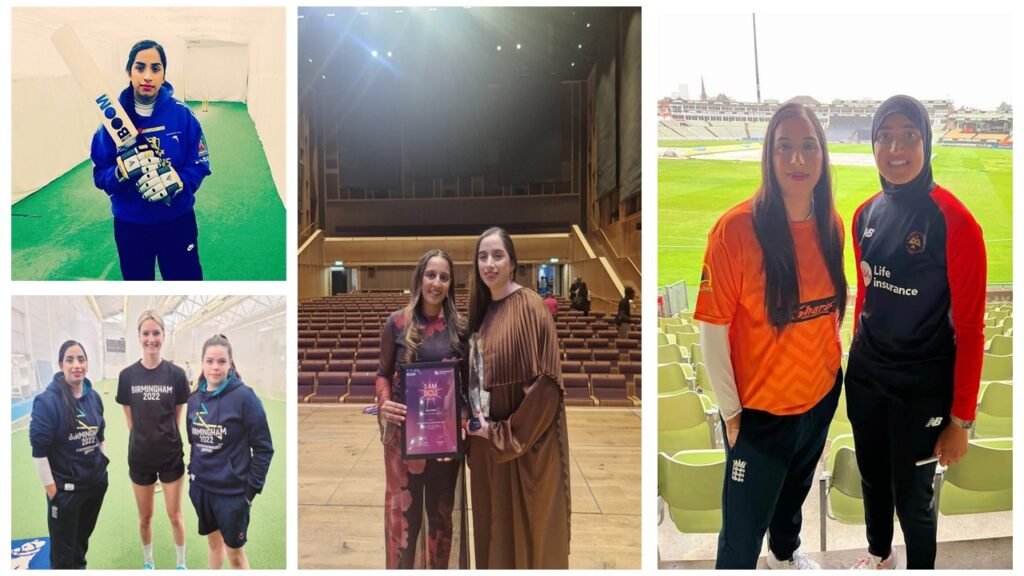
Over the years, I played at Lord’s, trained with England women’s players, and competed against international teams like Hong Kong, Japan, and Australia.
Eventually, I transitioned into coaching, umpiring, and community leadership, and in 2011 we founded Sporting Pathways CIC to create structured opportunities for young people.
Dr. Shabana Parvez: What inspired you to dedicate your life to cricket, diversity, and empowering women?
Salma Bi:A major inspiration was realizing how many young girls lacked opportunities, representation, and encouragement in sports. I wanted to show them that women—especially South Asian women—belong in leadership, sports, and public life.
Cricket gave me confidence, purpose, and discipline. I wanted other girls to experience those same benefits regardless of their background or circumstances.
I also believe diversity strengthens sports and society. When young girls see someone who looks like them succeeding, it changes what they believe is possible.
Career & Achievements
Dr. Shabana Parvez: You’ve received multiple honours including the British Empire Medal—what did that moment mean to you personally?
Salma Bi:Receiving the British Empire Medal was incredibly emotional and humbling. It was not just recognition for me personally—it represented every woman and girl who had faced barriers in sports and still continued to push forward.
Coming from a British Pakistani background and receiving such a prestigious national honour was a proud moment for my family and community. Visiting Buckingham Palace and meeting members of the Royal Family was unforgettable.
It meant everything, but not just for me. It represented every girl who has been told she cannot do something.
Receiving the British Empire Medal was a deeply emotional moment, especially because of the recognition at Buckingham Palace.
We were invited to the Royal Garden Party at Buckingham Palace, where I had the honour of meeting His Majesty King Charles III (then Prince Charles) and Queen Camilla (then Duchess of Cornwall), who attended the reception and met recipients in the gardens.
Standing there with my family, especially my husband by my side, was an unforgettable moment. It felt like years of hard work, sacrifice, and resilience had finally been acknowledged at the highest level.
Most importantly, it validated years of hard work dedicated to inclusion, diversity, and grassroots sports development.
Dr. Shabana Parvez: With 11 national awards and hosting over 15 national events, which achievement are you most proud of and why?
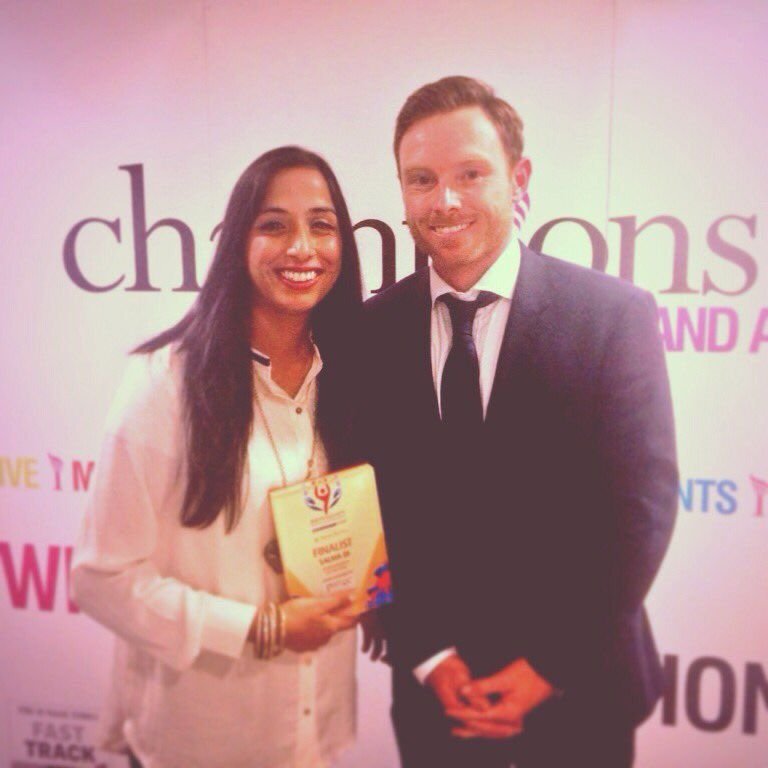
Salma Bi:The British Empire Medal is certainly one of my proudest moments, but another achievement very close to my heart was receiving recognition at the British Asian Sports Awards.
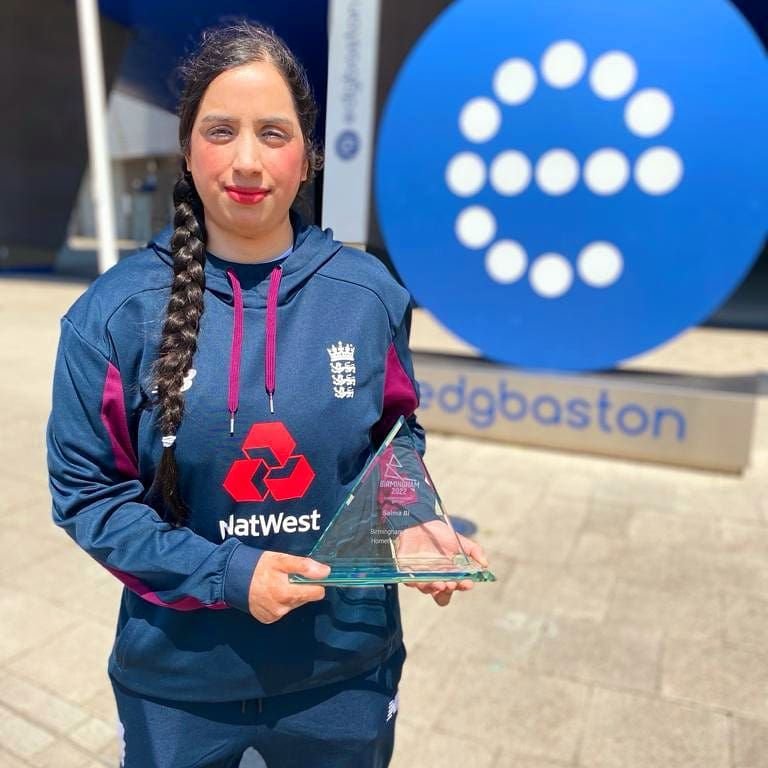
The British Empire Medal is a major highlight, but the 2009 British Asian Sports Awards was a life-changing moment.
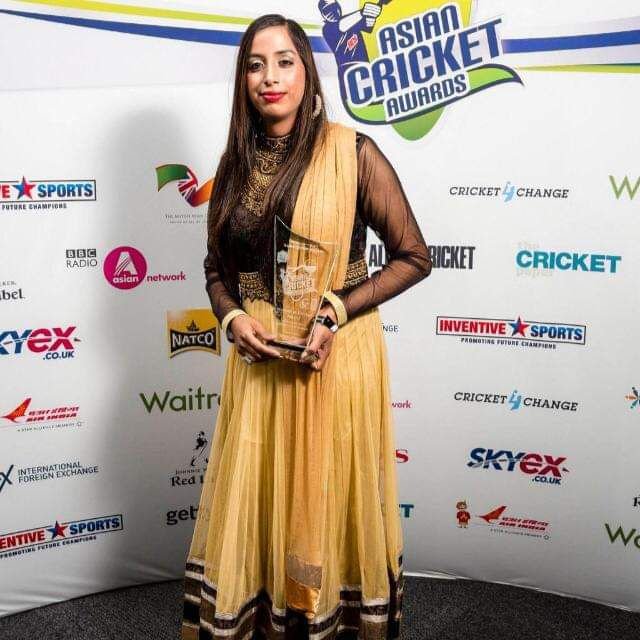
I was close to giving up cricket entirely, but that night I received the Outstanding Achievement Award.
Backstage, I met Dame Denise Lewis, who told me she had voted for me and was inspired by my story.
I also received encouragement from Charlotte Edwards, former England captain, who told me not to stop because young girls were watching.
That moment completely changed my direction.
That moment reminded me that even when you feel unseen, your work may still be inspiring others.
Dr. Shabana Parvez: How did the idea of creating the All Asian Women’s Inspirational Cricket Team come about?
Salma Bi: The idea developed through conversations with my friend Haleema Khan, who shared the vision of creating opportunities specifically for Asian women in cricket.
We realized there were talented girls across the country who lacked visibility and opportunities. By bringing them together into one team, we wanted to inspire confidence, representation, and belonging.
The initiative became much bigger than cricket—it became a symbol of inclusion and empowerment.
Dr. Shabana Parvez: What has your experience been representing county cricket teams and being part of the Marylebone Cricket Club?
Salma Bi:Representing county teams such as Worcestershire and Northamptonshire was a major milestone because there were very few British Pakistani women involved in county cricket at the time.
Being associated with the Marylebone Cricket Club (MCC) was equally special because of its historical significance within cricket. Playing at Lord’s and alongside elite players gave me invaluable experience and confidence.
Those experiences taught me resilience, professionalism, and leadership under pressure.
Dr. Shabana Parvez: As Director of Sporting Pathways CIC, how are you shaping the future of inclusive sports?
At Sporting Pathways CIC, our mission is to make sports accessible to everyone regardless of gender, ethnicity, ability, or background.
We organize inclusive tournaments, leadership programs, coaching initiatives, and mentorship opportunities that encourage participation from underrepresented communities.
Our goal is not only to create athletes but also future leaders, coaches, officials, and role models who will continue driving positive change in sports.’
Impact & Social Work
Dr. Shabana Parvez: You’ve been a powerful advocate for vitiligo and mental health—what motivated you to speak openly about these issues?
Salma Bi:I believe silence around mental health and visible conditions like vitiligo often creates unnecessary stigma and isolation.
By speaking openly, I hope to normalize these conversations and encourage people to seek support without shame. Many individuals silently struggle with confidence, identity, and emotional wellbeing.
If sharing my experiences helps even one person feel stronger or less alone, then it is worthwhile.
Dr. Shabana Parvez: Through your initiative Believe In Making A Difference (M.A.D Productions), what kind of impact have you seen in communities?
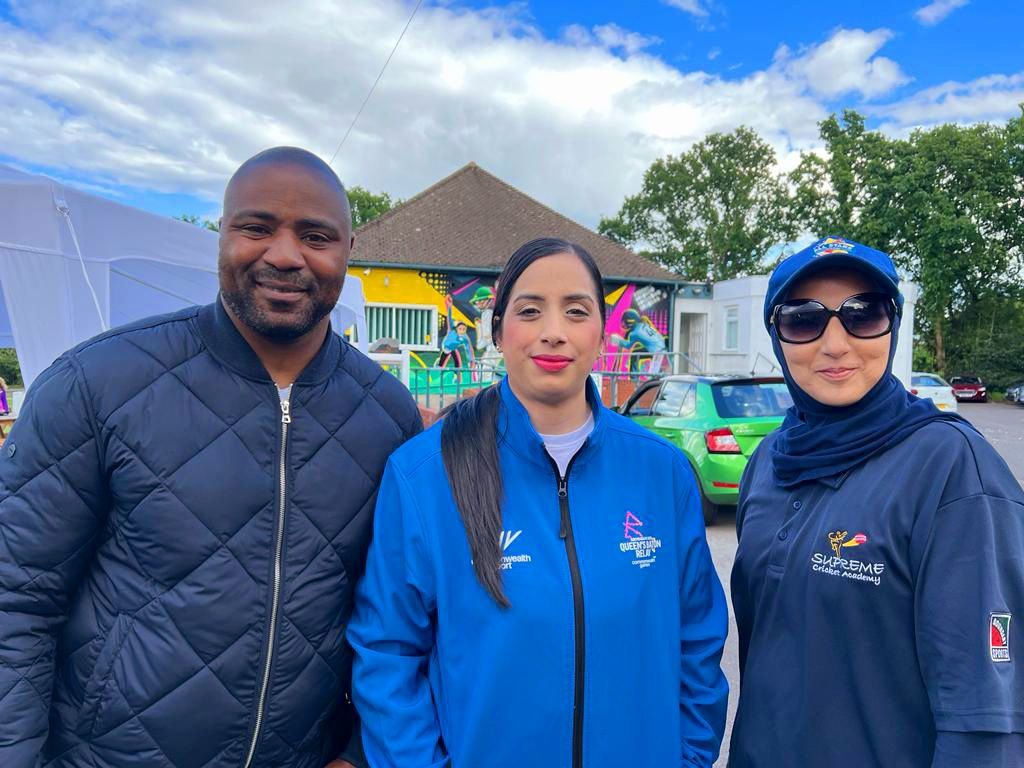
Salma Bi: M.A.D Productions has created opportunities for people from diverse backgrounds to connect, grow, and feel empowered through sports, events, and community engagement.
We’ve seen women gain confidence, young people discover leadership skills, and families become more connected through participation.
Sometimes the biggest impact is simply giving someone a safe and supportive space where they feel seen, heard, and valued.
Dr. Shabana Parvez: How do you balance your demanding role in healthcare with your extensive community work?
Salma Bi:Balance requires discipline, passion, and strong support from family and colleagues.
Healthcare can be emotionally demanding, but community work and sports also energize me because they allow me to create positive change outside the hospital environment.
I try to remain organized, prioritize wellbeing, and remind myself why I started this journey in the first place.
Events & Leadership
Dr. Shabana Parvez: You’ve hosted major sporting events like T10, Futsal, and The Fifty—what goes into organizing such large-scale initiatives?
Salma Bi: Organizing large-scale events requires months of planning, teamwork, logistics, fundraising, partnerships, volunteer coordination, and community engagement.
The most important aspect is creating an inclusive environment where participants feel welcomed and inspired.
Seeing people from across the country come together through sports makes all the hard work worthwhile.
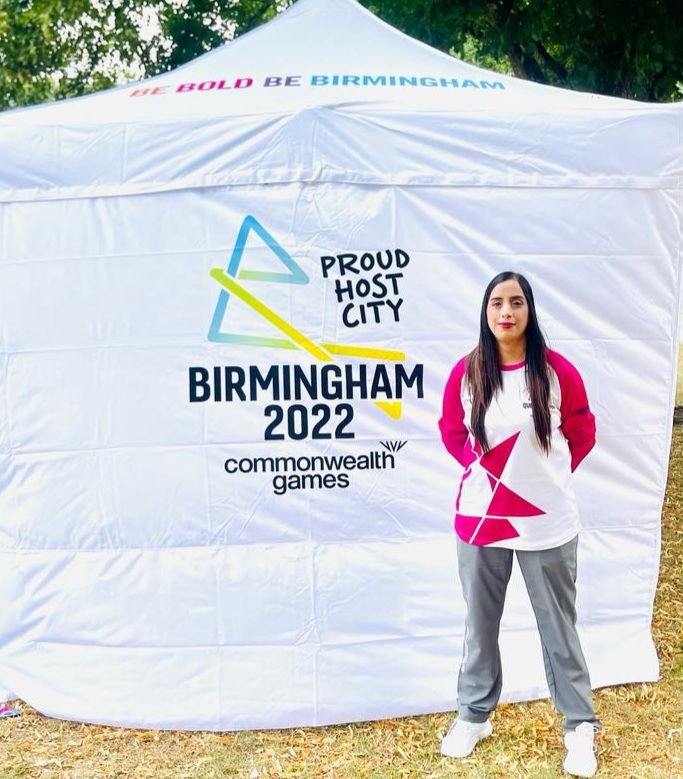
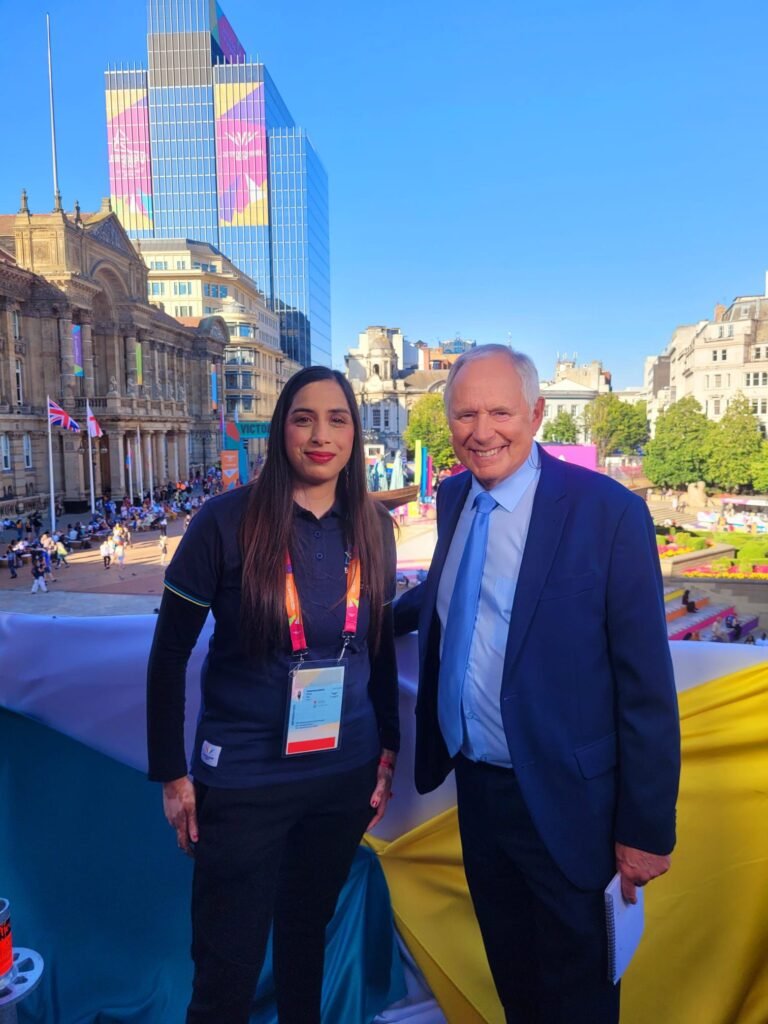
Dr. Shabana Parvez: As an Ambassador and Hometown Hero for the Birmingham Commonwealth Games 2022, what were your key takeaways from that experience?
Salma Bi:The Commonwealth Games highlighted the power of sports in uniting communities and celebrating diversity.
It was inspiring to see Birmingham showcase its multicultural identity on a global stage. I was proud to represent my city and contribute to an event that inspired future generations.
The experience reinforced my belief that sports can break barriers and build stronger communities.
Challenges & Resilience
Dr. Shabana Parvez: What have been some of the biggest challenges you’ve faced in your journey, especially as a woman in sports and leadership?
Salma Bi: One of the biggest challenges was constantly having to prove that I belonged in spaces where women—especially South Asian women—were underrepresented.
There were moments of isolation, self-doubt, and resistance, but I learned to use those experiences as motivation rather than obstacles.
Balancing family expectations, cultural perceptions, career ambitions, and sports was also challenging, but perseverance helped me continue moving forward.
Dr. Shabana Parvez: How did you overcome moments of self-doubt or setbacks along the way?
Salma Bi:I reminded myself why I started and focused on the bigger purpose behind my work.
Support from mentors, teammates, family, and community members also helped me stay motivated during difficult times.
Most importantly, I accepted that setbacks are part of growth. Every challenge taught me resilience and strengthened my determination.
Fun & Personal Side
Dr. Shabana Parvez: Outside of your professional and social commitments, what do you enjoy doing in your free time?
Salma Bi: I enjoy spending quality time with my family and children. Family is very important to me.
I also enjoy traveling, mentoring young people, attending community events, and simply relaxing with close friends whenever I get the opportunity.
Dr. Shabana Parvez: If you weren’t in sports or healthcare, what career path do you think you would have chosen?
Salma Bi: I think I would still have chosen a profession connected to helping people—possibly teaching, youth development, or counseling.
I’ve always been passionate about supporting others and creating positive change within communities.
Vision & Message
Dr. Shabana Parvez: What is your long-term vision for diversity and inclusion in sports globally?
Salma Bi: My vision is for sports to become truly inclusive where opportunities are based on talent, passion, and commitment rather than gender, ethnicity, religion, or background.
I want future generations to grow up seeing diversity as normal and leadership as accessible to everyone.
Representation matters, and inclusive environments create stronger communities and better sporting cultures.
Dr. Shabana Parvez: What advice would you give to young women who aspire to break barriers in sports and leadership?
Salma Bi: Believe in yourself even when others doubt you.
Do not allow fear, stereotypes, or setbacks to define your potential. Stay committed to your goals, continue learning, and surround yourself with supportive people.
Most importantly, never underestimate the impact your journey can have on inspiring others.
Dr. Shabana Parvez: Finally, what message would you like to share with the global Desi community watching The Desi Buzz Show?
Salma Bi: Never be afraid to dream beyond limitations. Our communities have incredible talent, resilience, and potential.
Support one another, uplift young people, and continue creating opportunities for future generations.
No matter where you come from, your background should never limit what you can achieve.